Anatomy of a Great Prompt
Learn the four essential components of effective AI prompts: Roles, Goals, Context, and Constraints. This practical guide shows beginners how to structure requests that get precise, relevant results from AI tools. Transform vague questions into powerful instructions by mastering these fundamental building blocks of prompt engineering.
1/8/20243 min read
You wouldn't ask a stranger on the street to "do something for me" and expect great results. Yet that's essentially what many people do when they interact with AI—they throw out vague requests and wonder why the responses feel generic or miss the mark.
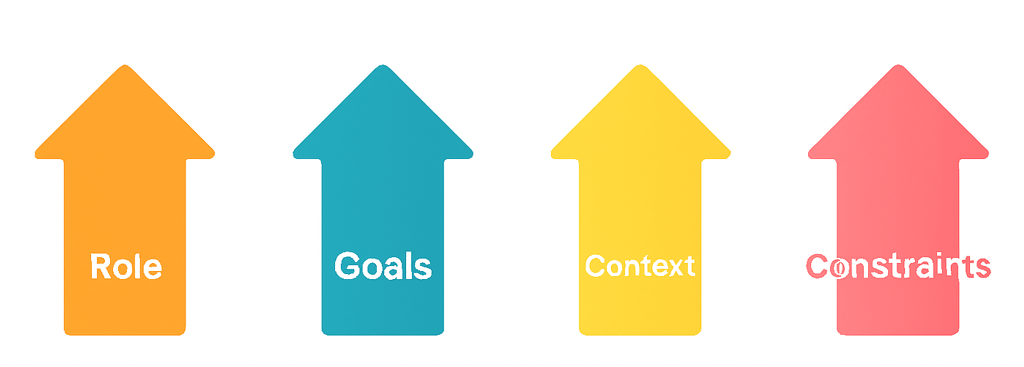
The secret to getting exceptional results from AI isn't complicated. It's about structuring your prompts using four key elements: Roles, Goals, Context, and Constraints. Think of these as the building blocks that transform a basic question into a powerful instruction. Let's break down each component so you can start crafting prompts that actually deliver.
Role: Tell the AI Who to Be
Assigning a role is like hiring the right expert for the job. When you define who the AI should be, you're tapping into specific knowledge patterns and communication styles embedded in its training.
Compare these two prompts:
"Explain quantum computing"
"You are a high school physics teacher. Explain quantum computing to your 10th-grade class using everyday analogies"
The second prompt will generate an explanation that's accessible, engaging, and appropriate for the audience. The role shapes everything—vocabulary, tone, depth, and approach.
You might ask the AI to be a marketing strategist, a Python developer, a creative director, a financial advisor, or even a medieval historian. Each role brings a different perspective and expertise to the table. The more specific the role, the more tailored the response.
For example, "You are a UX designer specializing in mobile apps for elderly users" gives you insights very different from just "You are a designer."
Goal: Define What Success Looks Like
Your goal is the destination. What exactly do you want the AI to produce? Without a clear goal, you're taking a road trip with no address.
Weak goals sound like:
"Help me with my resume"
"Tell me about marketing"
"Write something about coffee"
Strong goals are specific and actionable:
"Rewrite my resume's professional summary to highlight my project management experience and leadership skills"
"Create a content calendar outline for January with three blog post ideas per week for a B2B SaaS company"
"Write a 200-word product description for premium Ethiopian coffee beans emphasizing origin story and flavor notes"
Notice the difference? Strong goals include action verbs, specify the deliverable, and define the scope. They answer: What should the AI create? What format should it take? What's the purpose?
When your goal is crystal clear, the AI can focus its energy on hitting that target rather than guessing what you might want.
Context: Provide the Background That Matters
Context is the information that helps AI understand your situation, audience, and needs. It's the difference between getting generic advice and getting advice tailored to your specific circumstances.
Think of context as answering these questions:
Who is this for?
What's the current situation?
Why does this matter?
Where will this be used?
For instance, if you're asking for social media content ideas, context matters enormously:
Without context: "Give me Instagram post ideas"
With context: "I run a small bakery in Portland that specializes in gluten-free pastries. My Instagram followers are mostly local customers aged 25-45 who care about dietary restrictions and artisan quality. I post three times per week and want to increase engagement."
That context allows the AI to suggest ideas that actually fit your business, audience, and goals rather than generic "post a photo of your product" advice.
The right context helps AI personalize its responses to your unique needs, making the output immediately more useful and relevant.
Constraints: Set the Boundaries
Constraints aren't limitations—they're focusing tools. They tell the AI what parameters to work within, preventing it from wandering off in unhelpful directions.
Common constraints include:
Length: "Write a 150-word summary" or "Keep your response under five bullet points"
Tone: "Use a professional tone" or "Write in a casual, friendly voice"
Format: "Provide this as a numbered list" or "Structure this as an email"
Audience level: "Explain this for beginners" or "Assume an expert audience"
Exclusions: "Don't use technical jargon" or "Avoid discussing price"
Constraints create clarity. Instead of getting a 1,000-word essay when you needed a tweet, you get exactly what fits your needs.
Putting It All Together
Here's a prompt using all four elements:
Role: "You are an experienced email marketing consultant." Goal: "Create a welcome email for new subscribers to my online fitness coaching program." Context: "My audience is busy professionals in their 30s-40s who want to get fit but struggle with time. My program focuses on short, efficient home workouts." Constraints: "Keep it under 200 words, use an encouraging but not overly enthusiastic tone, and include a clear call-to-action."
This structured approach transforms AI from a basic tool into a powerful collaborator. Master these four elements, and you'll consistently get better results from every AI interaction in 2024.