Ecosystems and Marketplaces
The AI industry's real battleground has shifted from model performance to ecosystem dominance. This analysis examines how model hubs, tool marketplaces, and custom assistant stores are reshaping distribution and competition—exploring what these emerging platforms mean for developer strategy, vendor lock-in, and the future concentration of AI power across the technology landscape.
6/2/20254 min read
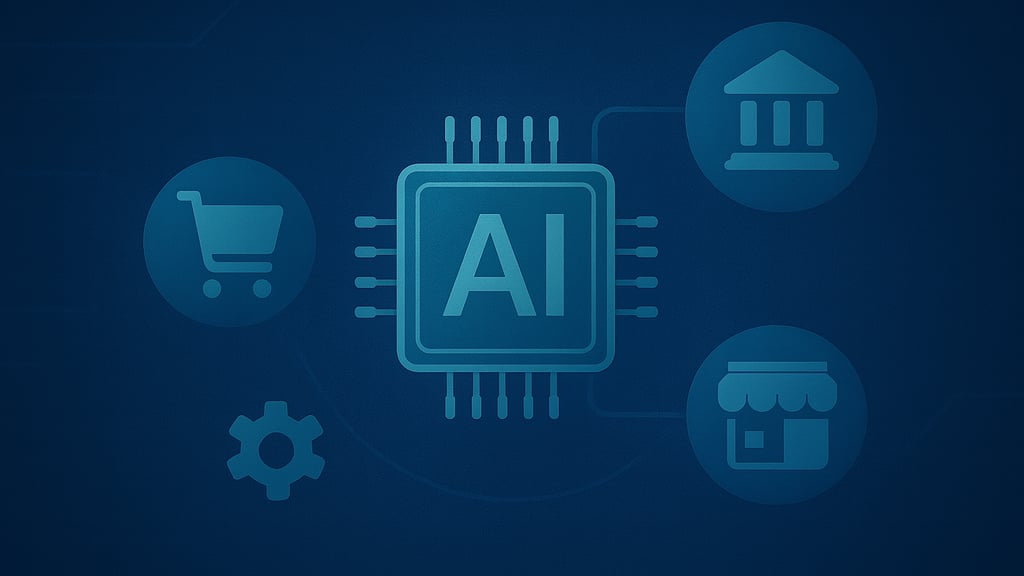
The artificial intelligence landscape is undergoing a seismic shift. While headlines focus on which model scores highest on the latest benchmark, the real battle is happening elsewhere—in the emerging ecosystems of model hubs, tool marketplaces, and custom assistant stores that are quietly reshaping how AI reaches users and developers alike.
We're witnessing the early stages of what will define the AI industry for the next decade: not a war over model superiority, but a war over distribution, integration, and ecosystem lock-in.
The Ecosystem Explosion
The past eighteen months have seen an unprecedented proliferation of AI marketplaces. Hugging Face now hosts over 500,000 models and datasets, establishing itself as the GitHub of machine learning. OpenAI's GPT Store, launched in early 2024, already features millions of custom assistants created by developers worldwide. Meanwhile, cloud providers like AWS Bedrock, Google's Vertex AI, and Microsoft's Azure AI have transformed from simple model hosting services into comprehensive AI ecosystems with integrated tooling, governance frameworks, and enterprise-grade infrastructure.
This explosion isn't accidental. As model quality converges—with multiple labs now delivering frontier-level performance—differentiation has moved up the stack. The question is no longer "which model is best?" but "which platform makes it easiest to build, deploy, and monetize AI applications?"
Consider the strategic positioning. Google is embedding Gemini everywhere across its product suite, leveraging its massive distribution advantage. OpenAI is transforming ChatGPT into a super-app with its GPT Store, betting that users will start workflows inside their ecosystem and fan out from there. Anthropic is carving out the enterprise territory, positioning Claude as the trusted choice for companies that prioritize safety and reliability over consumer flash.
The Distribution Game
Distribution has always been destiny in technology, and AI is no exception. The companies winning today's platform wars aren't necessarily those with the best models—they're those with the best paths to users and developers.
Model hubs like Hugging Face have democratized access to AI, but they've also created new gatekeepers. When developers default to searching Hugging Face for pre-trained models, when enterprises turn to AWS Bedrock for vendor-neutral model access, these platforms accumulate immense power. They control discovery, shape best practices, and increasingly mediate the relationship between model creators and model users.
The custom assistant stores represent an even more direct play for consumer attention. OpenAI's vision of a GPT Store where creators can monetize their custom assistants mirrors Apple's App Store playbook: build the platform, take a percentage, and let developers race to create value on top. Early results show promise, with over three million custom GPTs created and revenue-sharing programs beginning to launch.
The Lock-In Question
But with great ecosystems come great switching costs. The same features that make these platforms attractive—deep integrations, proprietary tools, optimized workflows—also make them sticky. Enterprises implementing Azure OpenAI Service don't just adopt a model; they adopt Microsoft's authentication systems, their compliance frameworks, their monitoring tools. Moving becomes not just technically challenging but organizationally disruptive.
This is where the real platform war intensifies. AWS's strategy of positioning Bedrock as "Switzerland"—neutral territory supporting multiple model providers—directly challenges the integrated, proprietary approaches of Microsoft and Google. Open-source advocates point to initiatives like Meta's Llama releases as evidence that the future belongs to distributed ecosystems where no single player controls the stack.
The debate echoes earlier platform wars. Just as cloud computing consolidated around AWS, Azure, and Google Cloud despite early fragmentation, AI platforms may follow a similar trajectory toward a small number of dominant players. But the timing and identity of winners remains uncertain.
Developer Strategy in the Platform Era
For developers and enterprises, navigating this landscape requires careful strategy. The temptation is to go all-in on whichever platform offers the smoothest immediate experience. But smart developers are building with portability in mind.
This means emphasizing API standardization, using abstraction layers that allow model switching, and maintaining relationships with multiple providers even when primarily using one. It means being thoughtful about where to use proprietary features versus open standards. For critical business functions, dependency on any single vendor's unique capabilities creates unacceptable risk.
The rise of AI agent marketplaces adds another layer of complexity. As platforms move beyond static models to orchestrating multi-step workflows, the value shifts from accessing intelligence to accessing agency. The platform that makes it easiest to build, deploy, and manage autonomous agents may ultimately capture the most value—because agents, by their nature, require deeper integration with surrounding tools and data.
The Road Ahead
The AI marketplace wars of 2025 aren't just about who has the best technology. They're about who controls the chokepoints between AI capabilities and end users. They're about whether the future looks like three dominant clouds with integrated AI stacks, or a more fragmented landscape where open ecosystems compete with proprietary platforms.
Early indicators suggest we're moving toward consolidation, but with wrinkles. The hyperscalers—AWS, Azure, Google Cloud—have distribution advantages that pure-play AI companies struggle to match. Yet OpenAI's consumer traction and Anthropic's enterprise positioning show that specialized players can carve out defensible positions.
For developers, the takeaway is clear: build with eyes open to the strategic game being played around you. The platforms courting you today with generous free tiers and impressive features are simultaneously building moats that will shape the industry for years to come. Choose wisely, build portably, and remember that in platform wars, today's partners often become tomorrow's competitors.
The battle for AI's future is being fought not in research labs optimizing loss functions, but in marketplaces deciding who gets to build on top of whom—and on what terms. Welcome to the new platform wars. May the best ecosystem win.